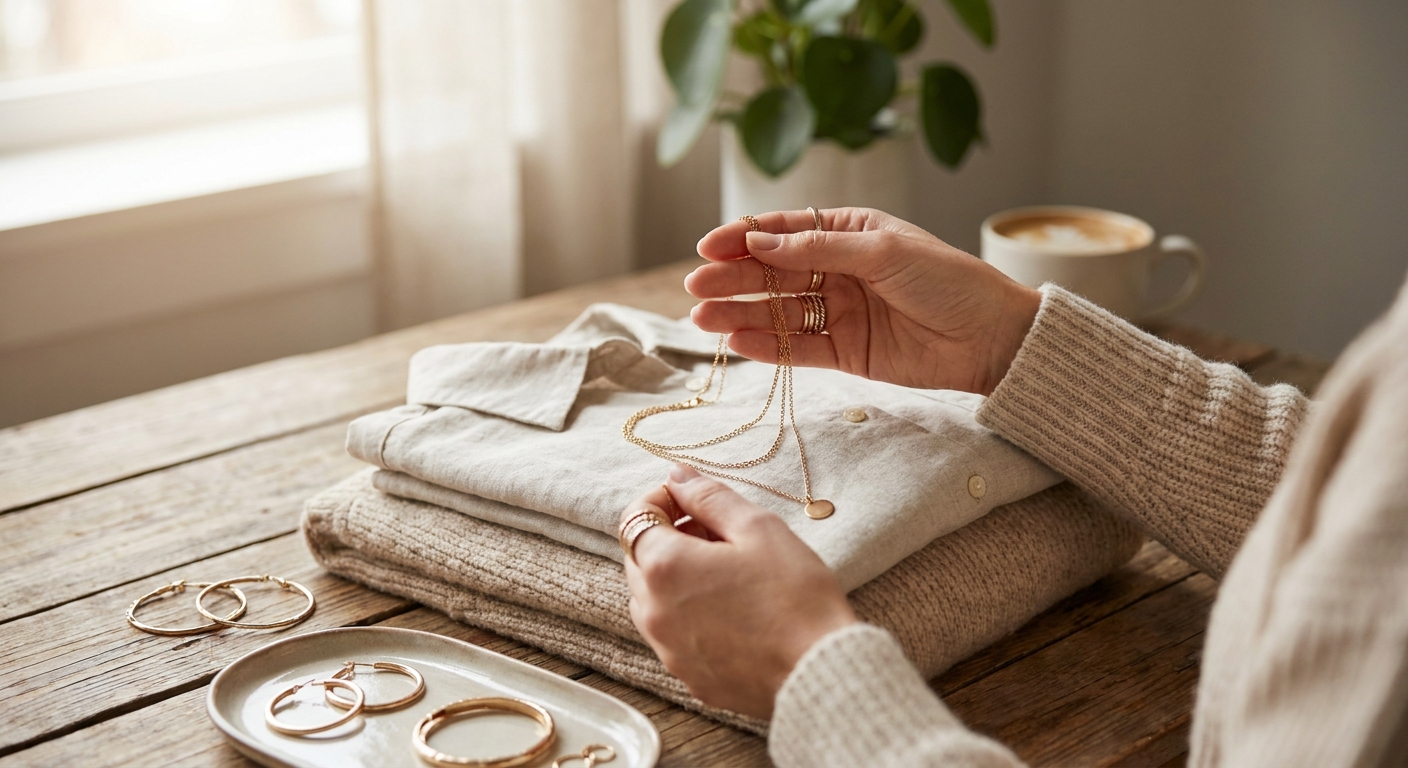
Fashion jewellery works hardest when it's styled with intention, not scattered on based on what's within reach in the jewellery box. This guide breaks down exactly how to layer, mix metals, and match pieces to everyday outfits so your accessories look pulled-together every single day of 2026, not just on special occasions.
- Layer 3 necklaces of varying lengths for depth without overload — start at 14, 18, and 22 inches.
- Match metal tone to your outfit's dominant hardware (zippers, buttons) before matching skin tone.
- One statement piece per outfit is the 2026 rule — stacked studs plus a bold cuff usually reads busy.
- Browse Dayaa Jewels for everyday pieces built for daily wear, not just photoshoots.
Why this matters
Most people own more jewellery than they actually wear, and the gap usually comes down to not knowing how pieces work together. A pendant that looked great alone gets shoved in a drawer once it clashes with a chain layered underneath.
Styling fashion jewellery for daily rotation isn't about buying more pieces. It's about building a system: three or four core items that combine in different ways depending on neckline, sleeve length, and how much metal you're already wearing on your watch or belt buckle. Get that system right once and every morning gets faster.
What you'll need
- 2-3 necklaces in different lengths (choker, 18-inch, 24-inch or longer)
- A set of stud or small hoop earrings for daily wear
- One statement piece (cuff, bold ring, or drop earrings) reserved for when the outfit is simple
- A small dish or tray by your mirror so pieces don't tangle in a drawer
- 5 minutes in the morning before you leave
If you're starting from scratch, look at everyday fashion jewellery pieces on Dayaa Jewels built specifically for daily rotation rather than one-time event wear.
The steps
1. Start with your outfit's neckline
The neckline decides the necklace, not the other way around. A crew neck wants a longer pendant that sits below the collarbone; a V-neck or scoop neck wants a shorter piece that follows the same line instead of fighting it.
Getting this wrong is the single biggest reason a necklace "doesn't work" — it's rarely the piece itself, it's the collar underneath it. Hold the necklace up against the outfit before putting it on and check where it lands.
Common mistake: wearing a choker with a high turtleneck. The two compete for the same 2 inches of neck space and both look cramped.
2. Pick one dominant metal tone for the day
Decide gold, silver, or rose gold before you touch a single piece, then commit for the whole outfit including your watch and belt buckle. Mixing metals can work, but mixing them by accident (a silver watch, gold necklace, and rose gold earrings) reads unplanned rather than intentional.
In 2026, mixed-metal styling is trending again, but the rule that makes it look deliberate is picking one metal as 70% of the look and the second as an accent, not a 50/50 split.
Expected outcome: your jewellery reads as one coordinated choice instead of three separate decisions.
3. Layer necklaces by length, not by size
Layering works when each chain sits at a visibly different length — think 14, 18, and 22 inches rather than three chains all landing within an inch of each other. Start with your shortest piece closest to the neck and build outward.
Keep the layered pieces thin if you're wearing 2-3 together; save the thicker, heavier chain for wearing solo. Three thick chains stacked together will look heavy by 10am and start tangling by lunch.
Common mistake: layering three necklaces of almost identical length. They merge into one messy cluster instead of reading as intentional layers.
4. Match earrings to your hair and hemline, not just your outfit
If your hair is down and covering your ears, small studs disappear completely — size up to a small hoop or drop earring that peeks through. If your hair is up, studs and delicate pieces get to do the work they're designed for.
This step gets skipped constantly because people style jewellery to the outfit laid on the bed, not to how they'll actually look wearing it with their hair down. Check in a mirror with your hair in its actual daily style before deciding.
5. Reserve one statement piece per outfit
A bold cuff, a large statement ring, or oversized drop earrings should be the one loud element in an otherwise simple outfit. Pairing a statement cuff with statement earrings and a chunky necklace pushes an everyday look into costume territory.
The 2026 styling rule that keeps circulating for good reason: pick your loudest piece first, then build everything else around it at a lower volume. If the cuff is the star, the earrings go small and simple.
Expected outcome: the eye has one clear focal point instead of scanning three competing pieces.
6. Build a 5-minute rotation system at home
Keep your core daily pieces (2 necklace lengths, 1 stud set, 1 statement piece) in a shallow dish or tray you can see at a glance, separate from the pieces you save for events. Untangling a jewellery box in the morning is the fastest way to give up and grab whatever's on top.
Rotate the tray weekly so the same three pieces aren't doing all the work — fashion jewellery pieces get more wear life when they're rested between uses rather than worn daily without a break.
Build your everyday jewellery rotation
Shop layering necklaces, stud sets, and statement pieces for daily wear.
Troubleshooting
Necklaces keep tangling when layered. Attach a small jump ring or clasp extender halfway down the longer chain and clip the shorter chain to it. This keeps them at fixed relative lengths so they stop sliding into each other.
Gold jewellery looks dull against a warm skin tone. Warm tones usually read best with yellow or rose gold rather than silver or white gold — swap the metal tone before assuming the piece itself is the problem.
Earrings feel heavy by afternoon. Switch to hollow hoops or lightweight studs for daily wear and save solid, heavier pieces for shorter events. Comfort during 8+ hour wear matters more for daily jewellery than for occasional pieces.
A statement piece feels like "too much" for the office. Drop it to one wrist or one ear only — a single statement cuff with no other jewellery reads polished, while the same cuff plus a necklace and earrings reads loud.
Pieces tarnish faster than expected. Store fashion jewellery away from direct humidity and remove pieces before showering or applying perfume directly onto metal surfaces, since fragrance and moisture speed up tarnishing on plated finishes.
Tools and resources
- A small mirror at eye level near your closet for a final check before leaving
- A shallow jewellery tray or dish, separated by piece type
- A jump ring or extender for necklace layering
- Everyday pieces from Dayaa Jewels sized for daily rotation rather than one-off events
What to do next
Once your everyday rotation is dialed in, the next upgrade is building a second, smaller rotation for evenings — one or two pieces you swap in for dinners or events without rebuilding your whole jewellery tray. Start by picking one statement piece you don't currently own and testing it against your existing daily rotation for a week before buying more.
FAQ
How many pieces of jewellery should you wear at once for everyday outfits?
Three to four pieces total works best for daily wear in 2026 — one necklace or a thin layered set, one earring pair, and one ring or bracelet. More than that starts competing for attention.
Is it OK to mix gold and silver jewellery?
Yes, mixing gold and silver works when one metal makes up roughly 70% of the look and the other is an accent piece. A 50/50 split between the two tends to look accidental rather than styled.
What length necklace works for layering?
Layer necklaces at clearly different lengths — 14, 18, and 22 inches is a reliable starting combination. Chains within an inch of each other tend to merge into one cluster instead of reading as separate layers.
How do you keep fashion jewellery from tarnishing?
Keep fashion jewellery away from moisture, perfume, and direct sunlight, and store pieces separately rather than piled together. Removing jewellery before showering is the single biggest factor in plated pieces lasting longer.
Should earrings match the necklace metal?
Matching earring and necklace metal keeps a daily look coordinated and is the safer default for everyday outfits. Save deliberate metal mixing for when you have time to check the balance in a mirror first.
What jewellery works best with a crew neck top?
A crew neck pairs best with a pendant necklace that sits below the collarbone, roughly 18 to 22 inches long. Shorter chokers tend to get visually cut off by a high crew neckline.
How do you style one statement piece without overdoing it?
Wear the statement piece alone and keep every other piece of jewellery small and simple that day. A bold cuff or oversized earrings need visual space to read as the focal point, not competition.
Can you wear fashion jewellery every day without it looking cheap?
Yes, daily wear looks polished when pieces are matched in metal tone and rotated rather than worn identically every day. The difference between cheap-looking and polished is usually coordination, not the price of the piece.
One last thing
The fastest fix for a jewellery drawer that never gets touched isn't buying more pieces — it's cutting down to the 4-5 that actually rotate and putting everything else in a separate box out of sight. Decision fatigue at 7am is the real reason half a jewellery collection sits unworn, not a lack of good pieces.